
How to start a mobile hair salon in New Zealand
You’ve been cutting, colouring and styling for years, building your skills and growing your client list. You are a pro at helping people walk out of the salon feeling like the best version of themselves. But now? You’re ready to build something of your own.
You’re keen for more freedom and flexibility in your day, and more profit in your own pocket. And while starting your own mobile hair business feels like a big step, it also feels like an exciting one!
We’re here to show you that with the right advice, it’s also entirely possible. Let’s break down how to do it through the lens of someone who already has.
Meet Talia — a first-time mobile salon starter
Talia had been working in a busy hair salon in Wellington for eight years. She loved the work but was tired of the shift hustle and missing her daughter’s after-school events. When a couple of her regular clients said, “If you ever go out on your own, I’ll follow you,” it planted a seed.
Six months later, she launched Hair by Talia, a mobile salon service offering haircuts, colour, and blow waves for women. She visits clients at home and now sets her own schedule around hours that work for her, her family, and her clients.
Here’s what she did, and what you can learn from her journey.
Step 1: Start with what you’re known for, and find your edge
Talia didn’t try to be everything to everyone. She leaned into her strengths – stylish cuts and colour – and focused on mature-aged women who wanted in-home convenience without compromising quality. She knew how to create that “just-stepped-out-of-the-salon” feeling in someone’s living room — and she made that her signature.
Your point of difference doesn’t have to be bold, it just has to be genuine and specific. Start by asking:
- What do clients compliment you on most?
- Is there a particular skill or service you’re exceptional at?
- Do you work with a certain age group, hair type, or vibe especially well?
- Can you make appointments easier, faster, or more flexible than others?
- Do you bring a calm energy, high-end feel, or affordable option to your niche?
Maybe you’re known for great colours, grey blending, or for soothing anxious clients. Maybe you're the go-to for curly hair, or you are willing to work evenings and weekends. Whatever it is, be sure to leverage the thing that makes you stand out.

Action point
Ask three former or current clients what they love most about your work. Their words can help you shape your offer.
Step 2: Set up your business admin (without the overwhelm)
Talia admits she was nervous about the admin side of things – it felt like a big unknown, and she didn’t want to get overwhelmed managing bookings and finances. But once she broke it down into small steps, it wasn’t nearly as scary as she’d imagined. Here’s what she tackled early on:
Registering the business
She chose a business name (Hair by Talia) and registered it as a sole trader via the NZ Companies Office. If you're unsure what legal business structure is right for you, have a read of this guide which will help you understand the different types of business structures and decide whether you want to operate as a sole trader, a company or a partnership.
Getting insurance
Talia knew that working in clients’ homes came with risks, not just for her, but for them too. So before she took her scissors on the road, she made sure she was protected. If you’re going out on your own — especially out on the road — having the right insurance in place is a must. Here’s a quick breakdown of the essentials:
- Public liability insurance: Covers accidental damage or injury, like knocking over a mirror, or a client tripping on your cords. ACC doesn’t cover everything, so this one is non-negotiable.
- Professional indemnity insurance: If a client claims you made a mistake or gave bad advice that caused harm (like a bad reaction to a treatment), this covers legal costs and compensation. It’s often mandatory if you’re a member of a professional body like the NZ Association of Registered Beauty Professionals.
- Product liability insurance: Used or sold a product that caused harm? This covers claims related to the products you use, especially important if you sell take-home items.
- Equipment insurance: Protects your valuable tools, machinery, and devices against theft, damage or loss, whether you work from home or on the go.
- Income protection or business interruption insurance: As a self-employed hair stylist, your income depends on you being able to work. If you get sick or injured and can’t, this cover helps pay the bills while you recover.
Considerations before starting a mobile hair salon
- Working from different locations? Make sure your policy covers mobile services, not just a fixed premises.
- Doing high-risk or advanced treatments? Talk to a broker about specialist aesthetic or medical malpractice coverage.
- Salon vs mobile? If you’re setting up a home salon, you may need additional cover for clients visiting your property, especially if you own your home and want to protect your contents and liability.
Pro tip
Chat to a local insurance broker who understands beauty industry risks. They’ll help you tailor your cover so you’re not under- or over-insured.
Bonus tip: Think about personal safety when working mobile
As a mobile stylist, you’re entering private homes, sometimes for the first time. While most clients are wonderful, it’s worth having a basic personal safety plan in place. Talia made sure someone always knew where she was, kept her calendar shared with her partner, and gathered verifiable information from clients as part of her onboarding process, prior to their appointment.
Setting up finances
Talia opened a separate business bank account to keep her income and expenses clear, and signed up to Hnry, a New Zealand tax platform designed for sole traders. It automatically sets aside tax and ACC, sends invoices, and handles GST, saving hours of stress later.
Choosing simple booking and payment tools
To stay organised, she used Fresha for bookings and client reminders, and Smartpay to accept card payments on the go. There are a number of online platforms which can make managing bookings and client information easy.
Step 3: Lock in your brand and website name
Here’s where Talia did something smart early: she secured her domain name before someone else could grab it. Even though she had a Facebook page for promoting her work, her website quickly became an essential professional hub – a place for bookings, showcasing her services, and building credibility.
Your turn: Don’t wait to secure your domain name. It’s one of the fastest ways to make your business feel real, and it’s a digital address you own. Use the JumpStarter domain checker to see what’s available and grab yours before someone else does.
Pro tip
Your skills are your product, so show them off. Use before-and-after photos, share your process, and let people see the difference you make to how others feel.
Step 4: Sort your tools, space and schedule
Talia knew her mobile hair salon needed a reliable car, portable tools, and a smart schedule. She kept her kit streamlined and invested in:
- A fold-out table and stool
- A mirror with lights
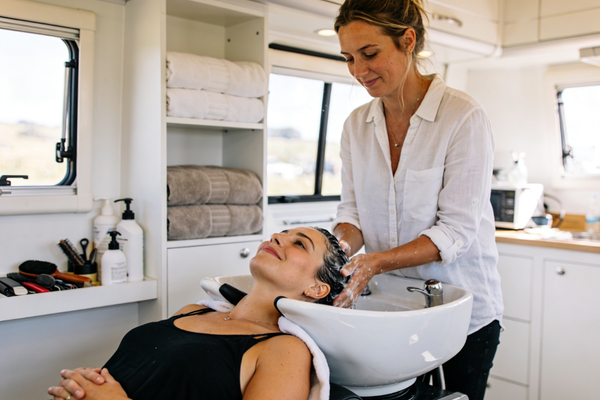
- A mobile hair washing basin
- Portable storage for hair colour and tools
- High-quality products from reputable suppliers
Step 5: Tell people about your mobile salon
When you’re going out on your own, one of the biggest early challenges is letting people know where to find you, especially if you’ve come from a salon job and can’t (and legally shouldn’t) take your client list with you.
Talia didn’t reach out to former clients directly. Instead, she focused on building her visibility in the community. It didn’t take long for the word to spread. Some clients who had worked with her in the past found her online, while others discovered her through local posts, tags, and referrals.
Don’t overthink your launch:
- Let the people who already know and trust you be your starting point
- Share your business on local social media community pages
- Ask for testimonials so you have some social proof others can trust
- Take before-and-after photos (with permission)
- Encourage tags on social media and Google Reviews.
Starting a mobile hair salon business is easier than you think
If you’re already working in the industry, going out on your own isn’t starting from scratch. All you need now is a plan, good systems to manage your admin, and a name that people can easily find online and remember.