
How to start a cleaning business in New Zealand
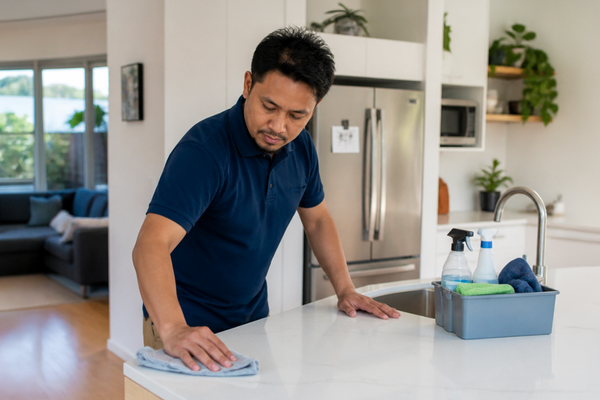
Let’s be honest, this isn’t a business for the squeamish. You’re cleaning ovens, scrubbing bathrooms, and dealing with the jobs most people avoid. But if you’re the kind of person who straightens the cushions before you leave a room and can’t walk past a streaky mirror, there’s opportunity here.
The industry rewards people who are thorough, reliable, and just a little bit obsessive about the details. If you’ve ever been called a clean freak and taken it as a compliment, and you’re not afraid of a bit of hard, hands-on work, you could turn your fastidious talents into a thriving business.
What kind of cleaning business do you want to start?
The cleaning industry is broader than most people expect. Getting clear on your model early will shape your pricing, your clients, and how you grow.
Residential cleaning
Home cleaning is the most common starting point: regular weekly or fortnightly cleans, end-of-tenancy cleans, and move-in or move-out services. The work is steady, the relationships are personal, and word-of-mouth referrals come quickly when clients trust you in their home.
Commercial cleaning
Offices, retail spaces, gyms, medical facilities and hospitality venues all need regular professional cleaning, often outside business hours. Commercial contracts tend to be larger and more predictable than residential work, which makes cashflow easier to manage. Clients typically expect a higher level of consistency and may require specific products or equipment.
Specialist cleaning
Window cleaning, carpet cleaning, pressure washing and post-construction cleans all sit in a specialist category. These services often command higher rates and can be offered as a standalone business or as add-ons to a broader residential or commercial offering.
Franchise vs independent
Buying into a cleaning franchise gives you a proven system, an established brand, and often a built-in client base. The cost is higher upfront and you'll operate within someone else's framework. Going independent gives you more control over how you work, how you price, and where you take the business. Most people starting small go independent first, but it can be helpful to talk to a franchise consultant or lawyer if that’s the path you’re considering.
How Andrew turned a few jobs into a full-time business
Andrew was between jobs in Wellington when he started picking up home cleaning work through word of mouth, initially helping a couple of elderly neighbours who needed a hand and doing a few one-off cleans for friends who knew how particular he was about getting things right. He hadn't planned it as a business, but within a couple of months, his schedule was full, and clients were asking if he could fit their neighbours in too.
He spent a week getting the basics sorted: registered his business name, opened a separate bank account, got insured, and locked in a website domain. It was a few hours of admin that made everything feel more official and set him up to grow properly rather than just stay busy.
A year later, he brought on a part-time contractor to handle overflow. Two years in, he runs a small team and has added commercial clients to his books alongside his original residential base. What drove it wasn't a complicated strategy; it was simply doing the job well and being someone clients felt comfortable recommending.
Steps to starting your cleaning business in New Zealand
1. Choose your niche and target market
Start with a clear focus rather than trying to offer everything. Residential and commercial clients have different expectations, schedules and price points. Specialist services require different equipment and skills. Pick the area that suits your situation and build from there.
2. Register your business and sort the basics
- Register your business name through the NZ Companies Office so you can open a business bank account and invoice clients professionally.
- Get insured. Public liability insurance is essential when you're working in clients' homes or commercial premises. It covers you if something is damaged or someone is injured while you're on the job. Commercial vehicle insurance may be needed too, as personal car insurance often does not cover business activities. It’s best to speak with a broker who can recommend any other cover you may need.
- Manage your tax. Keep business and personal finances separate from the start. Tools like Hnry handle tax and ACC automatically. If you expect to earn over $60,000 a year, you'll need to register for GST.
3. Price your services to be sustainable
Residential cleaning in New Zealand is typically charged by the hour or as a fixed rate per job. Most professional cleaners charge between $35 and $60 per hour, depending on region and service type. Commercial contracts are usually quoted as a monthly fixed fee based on frequency and scope.
Factor in everything when setting your rates: time, travel, products, equipment wear, admin and insurance. Underpricing might win early clients, but it makes the business unsustainable before you've had a chance to build it properly.
4. Secure your domain and get online
Most people looking for a cleaner will search online for credibility, even if they end up choosing someone through a referral. A professional website makes you easy to find, easy to trust, and easy to contact. Lock in your domain as soon as you settle on a business name; it is one of the simplest things you can do to protect the name you've chosen and make your business feel real.
Once you’ve done that, you can set up a professional email address using your domain (e.g. [email protected]) so you’re not communicating with clients through a personal Gmail or Hotmail account. It’s a small detail, but it signals that you’re established and organised.
Set up a free Google Business Profile at the same time so you show up in local search results and clients can leave reviews. A handful of genuine five-star reviews will do more for your reputation than most paid advertising.

Action point
Use the JumpStarter domain checker to see if your preferred name is available and lock it in today.
5. Get your first clients
Your first clients will almost certainly come through your existing network. Let people know you're open for business and ask directly for referrals. From there:
- Join local Facebook community groups and introduce yourself
- List your business on directories like Neighbourly and No Cowboys
- Offer a discounted first clean to make it easy for people to try your service
- Consider a business card or flyer drop in local letterboxes or business precincts
- Ask every happy client for a Google review
Pitfalls to avoid
- Working without a contract. Even for small residential jobs, a simple service agreement sets expectations on both sides and protects you if something goes wrong.
- Underpricing to get started. Cheap rates attract price-sensitive clients who are quick to leave for the next deal. Build your reputation on quality and reliability, and the right clients will stay loyal.
- Taking on too much too soon. Consistency is everything in this industry. One missed clean or a rushed job can undo the trust you've spent months building.
Ready to get started?
The skills that make a great cleaner – detail, reliability, care – are the same ones that build a great business. And the first step to making it official couldn't be simpler. Start by securing your business name and go from there.
Use the JumpStarter free domain checker to search available website domains so that it matches your business name and makes your business easy to find.