How to start a contracting business in New Zealand

Starting a contracting business in New Zealand is a popular path for professionals seeking flexibility and independence. In fact, over 140,000 Kiwi workers operate as contractors across industries like IT, healthcare, and construction.
This statistic shouldn’t be surprising. After all…
- Contracting gives Kiwi professionals flexibility in terms of when and where they work.
- The earning opportunities can be attractive, particularly in IT and construction.
However, you might not yet know much about the distinct challenges that come with launching and running a contracting business in New Zealand.
So, let’s jump right in.
Who is a contractor?
Let’s introduce you to some terms to get you familiar with the contracting space in NZ:
- A contractor is a self-employed individual or a company that provides another entity with goods or services under a contract, instead of being employed by them.
- FTE, or Full-Time Equivalent, is a way of measuring the workloads of both full-time and part-time workers. A salary being expressed as “$80,000 FTE”, for example, essentially means that if the given person were to work full-time hours, their salary would be $80,000 per annum.
- A fixed-term contract is an agreement that ends on a specific date, upon completion of a particular task, or when a specific event occurs. It is important to not confuse fixed-term employees with contractors. Fixed-term employees, for instance, are part of the given company’s workforce, whereas contractors are independent.
- A contractor’s hourly rate is the amount of money they charge for each hour of work they perform.
- A project-based contract is an agreement for a specific and defined project; such a contract has a clear beginning and end. This differs from the ongoing and long-term nature of an employment relationship.
If, then, you are specifically interested in contracting as an independent professional – potentially for many different entities over time – rather than an employment relationship with a single entity over time, this article is for you.
Contracting opportunities in NZ
The fields in which you may find opportunities for contracting in NZ include:
- Information technology, such as in web development, software engineering, and IT project management
- Healthcare, such as in nursing, physiotherapy, and palliative care
- Education, encompassing primary and secondary teaching
- Agriculture and farming, ranging from dairy farming and irrigation to cropping and environmental management
However, we must provide some words of warning here. Contracting in Aotearoa is a “feast today, fast tomorrow” career path. While there can be good years in which hourly rates skyrocket, there are also bad years, when contractors get cut in great numbers on short notice.
Life as a contractor, then, can be very insecure. Contracts can be terminated quickly, so you will need to plan your finances accordingly.
In a nutshell, contracting in NZ is not for the fainthearted.
Follow these 9 steps to start your contracting business
Inevitably, some aspects of launching a contracting business in Aotearoa overlap with the process of launching other types of NZ businesses.
However, certain elements are more specific to contracting. Let’s take you through them.
Step 1: Define your business and skills
You’ll need to decide on the industry in which to contract, as well as what services you will provide. This will largely come down to your skills and the market demand.
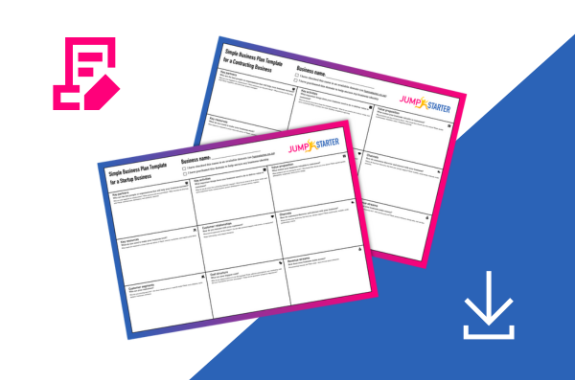
Step 2: Put together a business plan
Writing a business plan for your NZ contracting business will include detailing such aspects as your:
- Intended services
- Target market
- Pricing strategy
- Financial projections.
However, as a contractor, you will also need to plan for the likely gaps between your contracts.
Step 3: Decide on a business structure
Contractors often choose the sole trader business structure due to its simplicity. If you operate under your own name, you can legally contract as a sole trader in NZ without registering a company. You can still legally contract as a sole trader in NZ, just be sure to apply for an IRD number and New Zealand Business Number (NZBN).
Alternatively, setting up a limited liability company provides extra protection but involves more admin and cost.
Step 4: Register for taxes
As a new contractor, you will need to register for goods and services tax (GST) through the Inland Revenue Department if you expect the turnover of your Kiwi contracting business to be at least $60,000 over the coming 12 months.
For more in-depth information, please consult JumpStarter’s comprehensive guide to the other legal and registration requirements for a new business in NZ.
Step 5: Set up the relevant financial systems
Sole traders in NZ aren’t legally required to open a business bank account. However, doing so could make it easier for you to track and manage your finances, especially as your contracting business grows.

Pro tip
When budgeting as a contractor, be sure to plan on the knowledge that you won’t be getting any sick leave or holiday pay from any employer. This is because, of course, you will be effectively your own employer.
Step 6: Obtain the required licences and permits
Any licences or permits that you may need will largely depend on the industry in which you will be contracting.
- If, for instance, your contracting business will be in construction, you may require a Licensed Building Practitioner (LBP) certification to carry out certain work.
- As for contracting in healthcare, anyone seeking to work as a nurse in Aotearoa must be registered with the Nursing Council of New Zealand (NCNZ).
Step 7: Arrange the relevant insurance
You may look to protect yourself and your contracting business by arranging cover such as:
Public liability insurance
Public liability insurance covers a contractor’s legal liability in the event of someone being injured or their property being damaged due to the contractor’s business activities.
This cover isn’t legally mandatory in NZ. However, it may be a contractual obligation for some contractors, such as those in the construction sector.
Professional indemnity insurance
Professional indemnity, or “PI” insurance, protects businesses and individuals that provide professional services from claims of negligence or errors and omissions.
Income protection insurance
Although it’s optional, income protection insurance could help a Kiwi contractor cover missing income during contract gaps or illness.
Step 8: Set up contracts and legal agreements
Next, it will be time to draft a standard contractor agreement.
This will need to set out your:
- Services
- Payment terms
- Deliverables (the specific work results you will provide).
We would urge you to do this alongside a lawyer, to ensure your standard agreement adheres to the Employment Relations Act 2000.
Step 9: Market your services as a contractor
With your legal and financial setup complete, it’s time to focus on promoting your services.
You might have an existing base of relevant connections built up through attendance of in-person events, as well as on LinkedIn, that you can tap into and further expand.
Action point
Are you eager to thrive with your contracting business in NZ? If so, take a look at JumpStarter’s online resources today. We would be honoured to support you on your journey as a Kiwi entrepreneur.